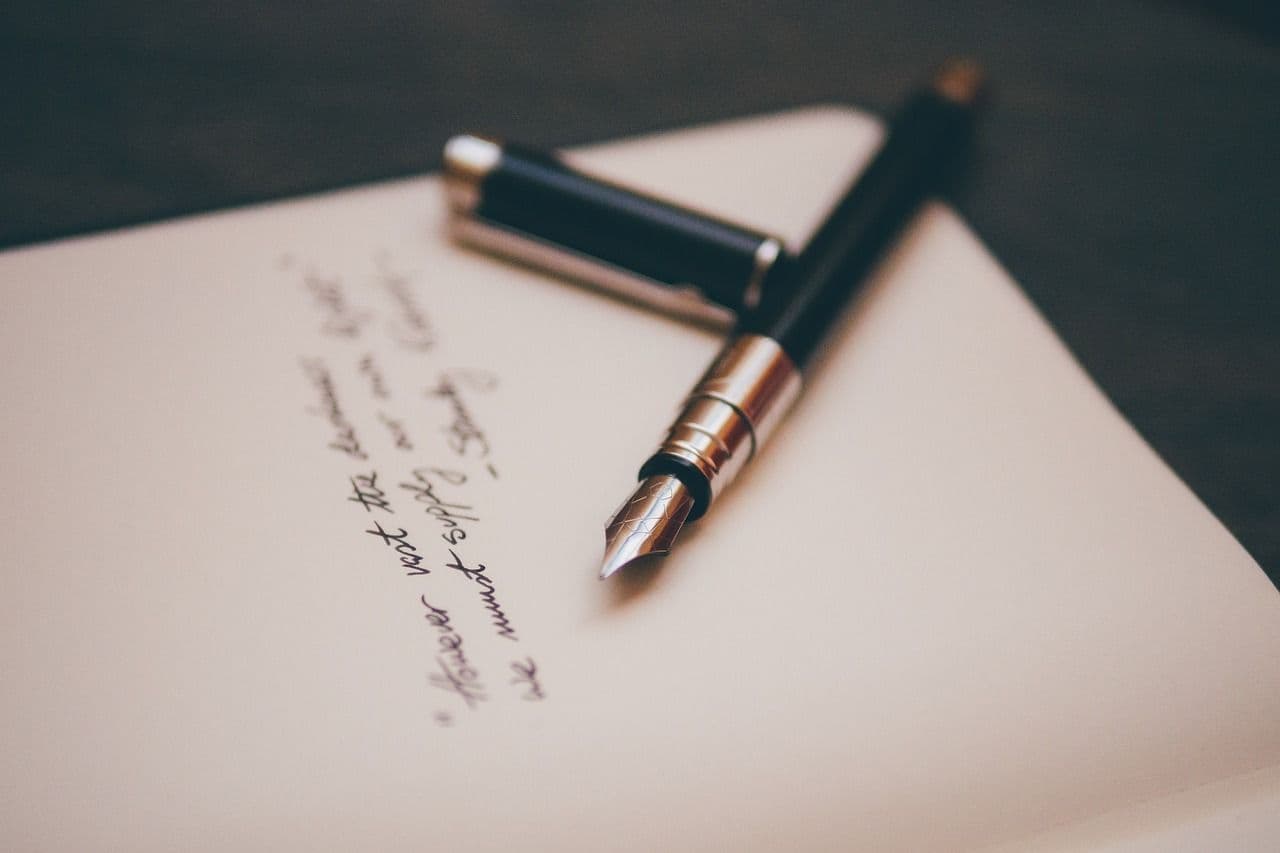
Handwriting is one of the few things you do every day that nobody taught you to fake. The size of your letters, the space between words, how hard you press - none of it is conscious, and all of it says something.
Below is a plain guide to what each part of your handwriting tends to signal, plus a section that walks you through reading your own. It comes from a company that looks at handwriting all day.
Handwriting analysis: what does yours say?
Grab the nearest thing you've written by hand - a shopping list, a card, a note stuck to the fridge. Don't tidy it up first. The writing you do when nobody's watching is the honest version, and that's the one worth reading.
Here's the run-it-yourself version of what people tend to read into each part.
- Size. Small, tight writing usually reads as focused and a little private, the sort of person who'd rather get on with things than be the centre of the room. Big, sprawling letters read the other way: outgoing, happy to take up space.
- Slant. Letters that lean right come across as warm and quick to engage. Upright writing reads as steady and self-contained. A lean to the left tends to read as someone who keeps a bit of themselves back.
- Pressure. Press hard enough to feel it on the back of the page and it reads as intensity and strong opinions. A light touch reads as easy-going and quick to adapt.
- Spacing. Wide gaps between words suggest someone who likes room to think and a bit of distance. Words packed tight together suggest someone who likes people close.
- Shape. Rounded, looping letters read as friendly and approachable. Sharp, angular ones read as driven and direct - the writing of someone with a to-do list and a plan to clear it.
- Your signature. This is the one to watch. It's the only handwriting most people ever practise, so it comes out half real and half performance. A signature bigger or bolder than the rest of your writing says you're more confident in public than the private version lets on. An unreadable scrawl says the name matters more to you than the letters do.
Graphology isn't a science, and anyone selling it to you as a personality test is overselling it. Your mood, the pen, the surface under the paper and how much of a rush you're in change how you write far more than your character does. Take this as a mirror to have some fun with, not a verdict.
Hold your writing next to someone else's, though, and the differences are real, and oddly telling. There's a reason a handwritten envelope feels different in your hand from a printed one before you've even opened it - and that feeling is the whole reason handwritten mail still works.
Here's a breakdown of how specific handwriting features, like cursive, rounded letters, and even the use of capital letters, can reflect personality traits.
Here's What Handwriting Says About You
Your handwriting reveals much about your personality, emotions, and thought processes. Whether it's your preference for lowercase or capital letters, or the size and shape of your writing, every stroke tells a story. Let's dive into what these traits signify.
1. The Role of Letter Style: Cursive vs. Print
Cursive handwriting reflects fluidity and a natural rhythm in thought and communication. People who write in cursive are often seen as creative, traditional, and expressive. In contrast, those who prefer printed letters may lean toward precision and clarity.
- Cursive writers: Often expressive and connected to their emotions.
- Printed writers: Logical, detail-oriented, and methodical.
2. Space Between Words: Independence or Connection?
The space between words is a subtle yet telling detail in handwriting analysis. Large spaces often indicate independence and a preference for solitude, while small spaces suggest a need for closeness and connection with others.
- Wide spacing: Independent and free-spirited individuals.
- Narrow spacing: Social and sometimes overly focused on relationships.
3. Rounded Letters vs. Angular Letters
The shape of your letters, whether rounded or angular, can highlight different aspects of your personality. Rounded letters are often associated with a friendly, approachable nature, while angular letters suggest ambition and determination.
- Rounded letters: Reflect openness and a warm personality.
- Angular letters: Indicate assertiveness and goal orientation.
4. Size and Legibility: Small Letters vs. Large Letters
The size of your handwriting is a strong indicator of how you see yourself in relation to the world. People who write with small letters are often detail-oriented and introverted, while those with larger letters may have a big personality and crave attention.
Additionally, legible handwriting reflects clarity in thought and communication, while illegible writing might suggest fast thinking or a lack of attention to detail.
5. Lowercase vs. Capital Letters: A Window to Your Confidence
Using lowercase letters in contexts where capitals are expected can suggest humility or modesty. On the other hand, writing with frequent capital letters may indicate confidence, assertiveness, or even a need to make an impression.
6. The Role of a Graphologist in Handwriting Analysis
A graphologist specialises in interpreting handwriting to uncover personality traits. From analysing the words and letters you write to identifying patterns in pressure, spacing, and slant, graphologists can provide detailed insights about your behavior.
Plenty of people now use handwriting-analysis tools and guides like this one to get a first read on their own writing, long before they'd ever speak to a graphologist properly.
What handwriting analysis reveals about personality
Whether your handwriting is defined by cursive, bold capital letters, or delicate small letters, the way you write is a reflection of who you are. Understanding these traits through handwriting can help you gain self-awareness and improve your communication with others.
RoboQuill brings that same handwriting to business mail - letters, notes and envelopes, written at scale with real pens and real ink. It's why a RoboQuill envelope gets opened instead of binned.
See also: Handwritten Letters, How Automated Handwriting Works, Handwritten Notes